Build the AI skills frontier labs hire for.
Understand models, reproduce a result, and build something you can explain. Learn for free with Prof Rod.
Study models, reproduce results and build AI systems you can explain. Take a first step into research with Prof Rod. Free lessons and a from-scratch Python book.
Start hereChoose a path for the skills you want to buildStart with Chapter 1: your first model experimentSend one request. Trace what the model computes. No account needed.Two places to begin
Choose your first project
Project 110 min read
Calibrate an AI judge
Read an AI judge's confusion matrix before you trust its error score.
Try the judge-calibration guide
Requires a few cases you label by hand before the judge sees them.
Project 27 min read
Understand how an agent works
See what an agent remembers after a restart with a small Python example.
Try the memory example
Requires basic Python.
Browse by skill:Measure modelsBuild systems around modelsMake it fast and bigFoundations
Newsletter
One lesson by email each week.
Free; unsubscribe any time.
Latest
Newest first- AnalysisReview a Month of Coding-Agent Work by Accepted OutcomesJudge a month of agent work from every attempt, not only the accepted ones: fix the denominator, compare within task families, put error bars on each rate and keep unresolved jobs in the ledger.
- NoteMeasure Human Agreement Before You Trust an LLM Judge
- GuideWrite the Acceptance Spec Before You Build an Eval Judge
- EssayA Job ID Is Not a Result: Check the Output Before Marking It Done
Two ways to learn
Learn with guided lessons
Short lessons with worked examples and checks, in order. The first lesson of every course is open to read.
A free account opens the remaining lessons and saves your progress.
The Prof Rod library
Build Your Always-On AI Agent From Scratch
Rod Rivera
The book, free to read
Understand an agent by building one
Tools, memory, permissions, evaluation and recovery, built in Python from scratch and measured on Claude. No account needed.
Open the bookWhere this skill is used
From the lesson to the work
No verified matches right now. Practice the investigation and check the opportunities board for the next update.
Explore opportunitiesThree characters in the lessons
Each lesson explains a mechanism, builds it, and measures what it can and cannot do.
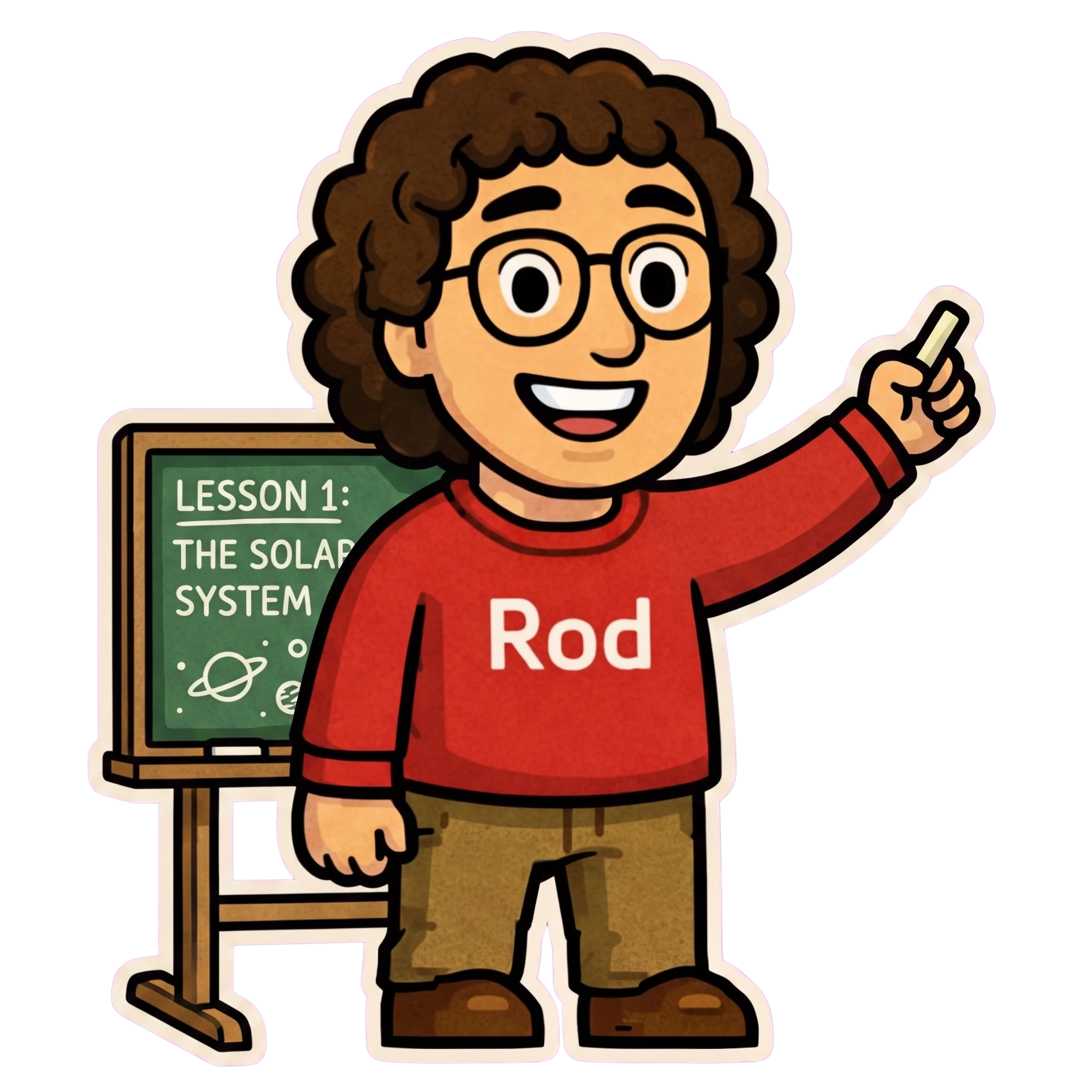
Prof Rod
Teacher
Explains the mechanism on the board and works the example, so you see the reasoning as well as the result.

Mator
Builder, visiting
Builds exactly what you specified, so gaps in the specification show up fast.

Quackster
Alchemist, visiting
Asks the question you skipped.

Who teaches this
Rod Rivera
Professor of the Practice in AI at ITAM, also teaching at CDTM/TUM. PhD, more than twenty peer-reviewed machine-learning papers, and fifteen years building ML systems at Alibaba Cloud, Huawei and Samsung. The lessons include the experiments that failed.
More about RodGet next week's lesson by email
Newsletter
One lesson a week, free
This only subscribes you to the newsletter; it doesn't create a course account.